
| Indicator description |
For Bosnia and Herzegovina, the indicator is based on data from the National Inventory Document (NID) of Bosnia and Herzegovina, prepared and submitted to the United Nations Framework Convention on Climate Change (UNFCCC). National data cover greenhouse gas emissions expressed in tonnes of CO₂ equivalent, in accordance with the methodology of the national greenhouse gas inventory. For presentation on this portal, the series of total emissions excluding sinks from land use, land-use change and forestry (LULUCF) is used. |
|---|---|
| Data source and methodology |
The indicator enables monitoring of changes in total greenhouse gas emissions in Bosnia and Herzegovina over time and provides a national presentation of the EU SDG indicator 13.10. The data are based on the official national greenhouse gas inventory submitted by Bosnia and Herzegovina to the UNFCCC. The latest source used is the 2024 National Inventory Document (NID) of Bosnia and Herzegovina, submitted to the UNFCCC on 13 August 2026. |
| Coverage and comparability |
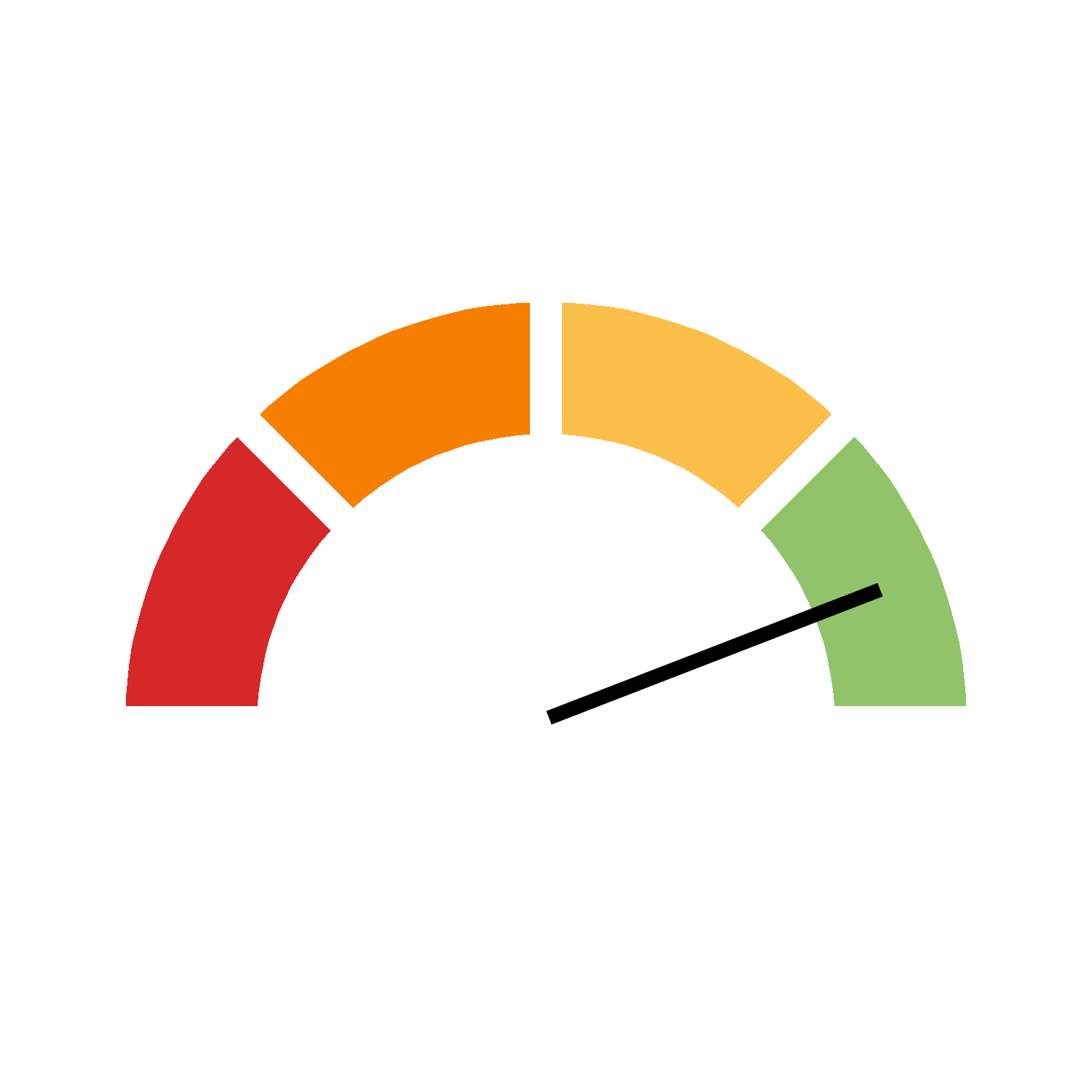
The national data were taken from the National Inventory Document of Bosnia and Herzegovina (NID) and are expressed in tonnes of CO₂ equivalent. For the purpose of monitoring progress on the portal, an emissions index with 1990 as the base year was calculated, with the value for 1990 set at 100. The index is calculated as the ratio of the emissions value in the observed year to the emissions value in 1990, multiplied by 100. The I90 series (1990=100) is used to assess progress. Since the desired direction for this indicator is a reduction in emissions, progress is configured with a negative direction. For the national presentation of short-term progress, the period 2017–2022 was applied, corresponding to the short-term period used in Eurostat’s SDG monitoring for indicator 13.10. The year 2030 is set as the target year in the indicator configuration on the portal. In this way, progress is assessed on the basis of changes in the emissions index over time, with a decrease in the index value representing a favourable direction of movement of the indicator. This approach to calculating progress represents the configuration used for the national presentation of the indicator on the BHAS portal and does not constitute a separate national Eurostat methodology for Bosnia and Herzegovina. |
| National context and objectives |
Reduce greenhouse gas emissions compared with the 1990 level, in accordance with the commitments and objectives of Bosnia and Herzegovina under the UNFCCC and its national climate policies. |
Download source data for disaggregations (.csv)
Headline data
| Year | Value | UNIT_MEASURE | SERIES |
|---|---|---|---|
| 2014 | 26.67638 | Million tons of CO2 equivalent | Net greenhouse gas emissions |
| 2015 | 27.24787 | Million tons of CO2 equivalent | Net greenhouse gas emissions |
| 2016 | 29.83549 | Million tons of CO2 equivalent | Net greenhouse gas emissions |
| 2017 | 30.37609 | Million tons of CO2 equivalent | Net greenhouse gas emissions |
| 2018 | 30.09402 | Million tons of CO2 equivalent | Net greenhouse gas emissions |
| 2019 | 28.70686 | Million tons of CO2 equivalent | Net greenhouse gas emissions |
| 2020 | 28.25462 | Million tons of CO2 equivalent | Net greenhouse gas emissions |
| 2021 | 29.23761 | Million tons of CO2 equivalent | Net greenhouse gas emissions |
| 2022 | 28.03144 | Million tons of CO2 equivalent | Net greenhouse gas emissions |
| 2014 | 7.56562 | Tonnes per capita | Net greenhouse gas emissions |
| 2015 | 7.74527 | Tonnes per capita | Net greenhouse gas emissions |
| 2016 | 8.49772 | Tonnes per capita | Net greenhouse gas emissions |
| 2017 | 8.66898 | Tonnes per capita | Net greenhouse gas emissions |
| 2018 | 8.60813 | Tonnes per capita | Net greenhouse gas emissions |
| 2019 | 8.22311 | Tonnes per capita | Net greenhouse gas emissions |
| 2020 | 8.13083 | Tonnes per capita | Net greenhouse gas emissions |
| 2021 | 8.46731 | Tonnes per capita | Net greenhouse gas emissions |
| 2022 | 8.16291 | Tonnes per capita | Net greenhouse gas emissions |
| 1990 | 100.0 | Index, 1990=100 | Net greenhouse gas emissions |
| 2014 | 78.35971 | Index, 1990=100 | Net greenhouse gas emissions |
| 2015 | 80.038416 | Index, 1990=100 | Net greenhouse gas emissions |
| 2016 | 87.63934 | Index, 1990=100 | Net greenhouse gas emissions |
| 2017 | 89.227309 | Index, 1990=100 | Net greenhouse gas emissions |
| 2018 | 88.398751 | Index, 1990=100 | Net greenhouse gas emissions |
| 2019 | 84.324081 | Index, 1990=100 | Net greenhouse gas emissions |
| 2020 | 82.995662 | Index, 1990=100 | Net greenhouse gas emissions |
| 2021 | 85.883116 | Index, 1990=100 | Net greenhouse gas emissions |
| 2022 | 82.340089 | Index, 1990=100 | Net greenhouse gas emissions |
| Indicator description |
The indicator measures total national emissions from both the sectors covered by the EU Emissions Trading System (ETS) and sectors outside the ETS (ESD), covering the so-called Kyoto basket of greenhouse gases. This includes carbon dioxide (CO₂), methane (CH₄), nitrous oxide (N₂O) and F-gases, namely hydrofluorocarbons (HFCs), perfluorocarbons (PFCs), nitrogen trifluoride (NF₃) and sulphur hexafluoride (SF₆), from all sectors of the greenhouse gas inventories. Estimated emissions from international aviation and maritime transport are excluded for individual countries. The indicator is presented both as net emissions including land use, land-use change and forestry (LULUCF) and excluding LULUCF. Using the individual global warming potentials (GWPs) of each gas, emissions are integrated into a single indicator expressed in CO₂ equivalents. The data are based on annual greenhouse gas inventory reporting under the UNFCCC and are provided to Eurostat by the European Environment Agency (EEA). |
|---|---|
| Data source and methodology |
The indicator is used to monitor progress towards Sustainable Development Goal 13 on climate action. The European Climate Law sets a target of reducing net greenhouse gas emissions by at least 55% by 2030 compared with 1990 and achieving climate neutrality by 2050. The “Fit for 55” package comprises interconnected measures in the areas of energy, transport, taxation and climate policy. |
| Coverage and comparability |
The indicator is updated annually. Eurostat states that data for individual countries are based on greenhouse gas inventory reporting under the UNFCCC, provided to Eurostat by the EEA. The time series starts in 1990 and the indicator is available in three forms: million tonnes of CO₂ equivalent, tonnes of CO₂ equivalent per capita and an index with 1990=100. |
| EU context and objectives |
Reduce net greenhouse gas emissions by at least 55% compared with the 1990 level by 2030 and achieve climate neutrality by 2050. |
Source 1
| Organisation |
Bosnia and Herzegovina – National Inventory Document (NID), submitted to UNFCCC |
|---|---|
| Link to data source | Link opens in a new window |
Source 2
| Organisation |
Agency for Statistics of Bosnia and Herzegovina – Demography 2023 |
|---|---|
| Link to data source | Link opens in a new window |