
| Indicator description |
The indicator measures general government gross debt in Bosnia and Herzegovina as a percentage of gross domestic product (GDP). It enables monitoring of public indebtedness relative to the size of the economy. |
|---|---|
| Data source and methodology |
The Central Bank of Bosnia and Herzegovina provides the data used to calculate the indicator to the Agency for Statistics of Bosnia and Herzegovina. The data are based on available external debt statistics, monetary and financial statistics, the debt database, and statistical data on government finance and financial accounts. General government gross debt covers debt within the scope of the applied statistical framework, including external and domestic debt. External debt includes loans contracted by Bosnia and Herzegovina and loans contracted directly by the entities, while domestic debt comprises domestic debt securities and loans. |
| Coverage and comparability |
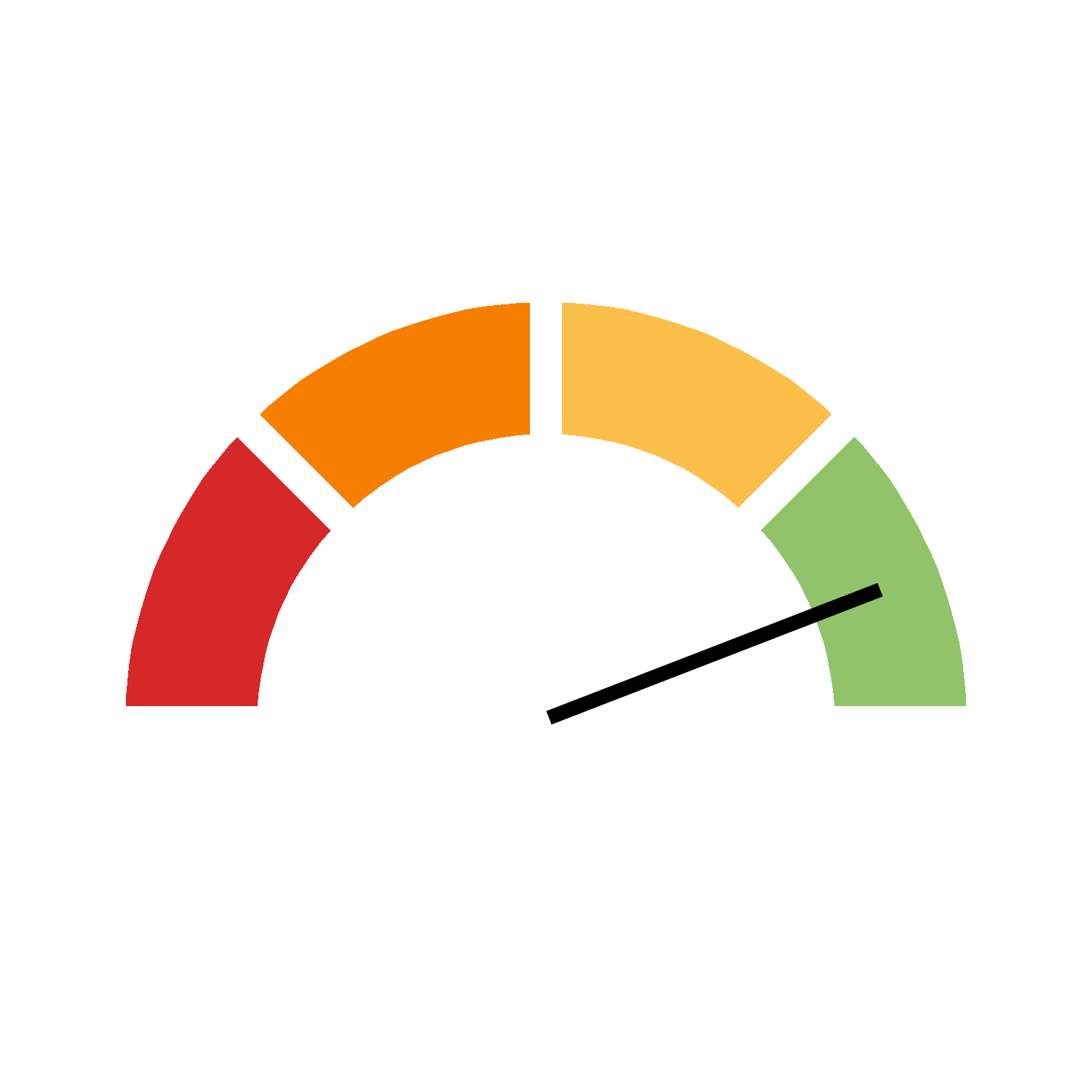
Progress is calculated automatically using the value of general government gross debt expressed as a percentage of GDP (PC_BDP). The calculation uses 2016 as the base year, 2030 as the target year for the calculation, and a negative direction, meaning that a decrease in the indicator is interpreted as a favourable development. Based on these settings, the portal currently displays the status “Significant progress”. This status reflects the movement of the indicator in relation to the settings used for the automatic progress calculation. Changes in the indicator may result from changes in gross debt, GDP, or both factors. |
| National context and objectives |
The Maastricht criterion sets a reference value of 60% of GDP for general government gross debt. This value serves as a benchmark for comparison but does not constitute a formally established national target for this indicator in Bosnia and Herzegovina. |
Download source data for disaggregations (.csv)
Headline data
| Year | Value | UNIT_MEASURE | SERIES |
|---|---|---|---|
| 2016 | 39.1 | Percentage of gross domestic product (GDP) | General government gross debt |
| 2017 | 35.6 | Percentage of gross domestic product (GDP) | General government gross debt |
| 2018 | 32.1 | Percentage of gross domestic product (GDP) | General government gross debt |
| 2019 | 32.8 | Percentage of gross domestic product (GDP) | General government gross debt |
| 2020 | 37.3 | Percentage of gross domestic product (GDP) | General government gross debt |
| 2021 | 35.8 | Percentage of gross domestic product (GDP) | General government gross debt |
| 2022 | 31.2 | Percentage of gross domestic product (GDP) | General government gross debt |
| 2023 | 29.9 | Percentage of gross domestic product (GDP) | General government gross debt |
| 2024 | 29.4 | Percentage of gross domestic product (GDP) | General government gross debt |
| 2025 | 29.9 | Percentage of gross domestic product (GDP) | General government gross debt |
| 2016 | 12100.0 | in millions of BAM | General government gross debt |
| 2017 | 11350.0 | in millions of BAM | General government gross debt |
| 2018 | 11200.0 | in millions of BAM | General government gross debt |
| 2019 | 11210.0 | in millions of BAM | General government gross debt |
| 2020 | 12190.0 | in millions of BAM | General government gross debt |
| 2021 | 12850.0 | in millions of BAM | General government gross debt |
| 2022 | 13100.0 | in millions of BAM | General government gross debt |
| 2023 | 12960.0 | in millions of BAM | General government gross debt |
| 2024 | 13740.0 | in millions of BAM | General government gross debt |
| 2025 | 15250.0 | in millions of BAM | General government gross debt |
| Indicator description |
The indicator is defined in the consolidated version of the Treaty on the Functioning of the European Union (2012), Council Regulation (EC) No 479/2009, as amended, and Regulation (EU) No 549/2013 of the European Parliament and of the Council on the European System of National and Regional Accounts (ESA 2010). It measures consolidated general government gross debt at nominal value at the end of the year as a percentage of gross domestic product (GDP) at current market prices. Gross debt comprises currency and deposits (AF.2), debt securities (AF.3) and loans (AF.4). The general government sector comprises central and state government, local government and social security funds, in accordance with the applicable statistical framework. |
|---|---|
| Data source and methodology |
Sustainable public financial management is important for macroeconomic stability and long-term fiscal sustainability. Monitoring general government gross debt in relation to GDP makes it possible to assess changes in public indebtedness relative to the size of the economy. This indicator is an important part of the European Union’s economic governance framework and the Excessive Deficit Procedure (EDP). |
| Coverage and comparability |
The indicator measures general government gross debt as a percentage of GDP. Its development is monitored over time: a decrease generally indicates a favourable change in relative indebtedness, while an increase may indicate that debt is rising in relation to the size of the economy. Changes in the indicator may result from changes in debt, GDP, or the combined effect of both factors. Results should be interpreted in the wider fiscal and economic context. |
| EU context and objectives |
The Maastricht criterion sets a reference value of 60% of GDP for general government gross debt. This value serves as a reference criterion for fiscal sustainability within the European Union’s economic governance framework. |
Source 1
| Organisation |
CBBiH |
|---|---|
| Link to data source | Link opens in a new window |
Source 2
| Organisation |
CBBiH |
|---|---|
| Link to data source | Link opens in a new window |