
| Indicator description |
For Bosnia and Herzegovina, the indicator measures economic losses caused by weather- and climate-related events, including meteorological events such as storms and avalanches, hydrological events such as floods, and climatological events such as heatwaves, cold waves, droughts and forest fires. Data for Bosnia and Herzegovina form part of the common European series used by Eurostat and are based on data from the CATDAT database provided by RiskLayer, with the European Environment Agency (EEA) as the data provider. In the national dataset, annual values are presented from 2000 onwards, while the 30-year moving average is presented from 2009 onwards. Values are expressed in million euro and euro per inhabitant, at constant prices. |
|---|---|
| Data source and methodology |
The indicator is used to monitor the economic consequences of weather- and climate-related extremes and to monitor Bosnia and Herzegovina’s progress in the areas of climate resilience and adaptation to climate change. It is particularly relevant because losses can vary substantially from year to year as a result of individual extreme events with major economic consequences. For this reason, in addition to annual values, a 30-year moving average is used to provide a more stable view of the long-term trend. The data for Bosnia and Herzegovina are methodologically linked to the same European source used for this indicator in the Eurostat database. |
| Coverage and comparability |
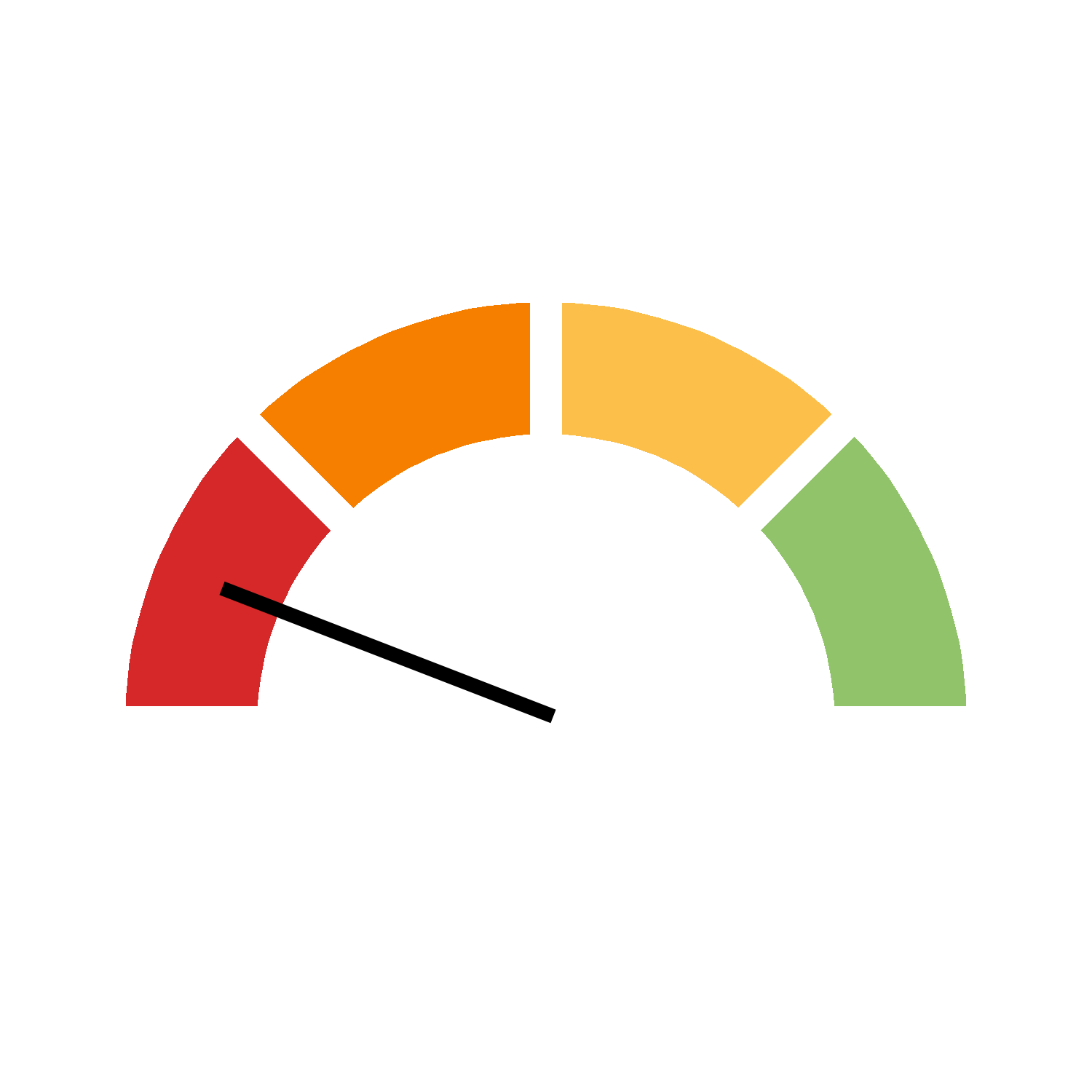
Progress at national level is calculated in accordance with the Eurostat approach for indicators without a quantitative target. For indicator 13.40, the absolute unit of million euro is used, and the 30-year moving average (AVG_30Y) series is selected for the progress calculation. In accordance with Eurostat’s methodology, short-term progress is assessed using the compound annual growth rate (CAGR) over the latest five-year period. For Bosnia and Herzegovina, the latest available period is 2019–2024. For 2019, the value of the 30-year moving average was EUR 161 million, while in 2024 it was EUR 178 million. The compound annual growth rate is calculated as follows: CAGR = (178 / 161)^(1/5) − 1 = +2.03% For this indicator, the desirable direction is a reduction in economic losses. Therefore, a positive growth rate of approximately 2.03% represents movement in the unfavourable direction. Under Eurostat’s scoring function for indicators without a quantitative target, this corresponds to a score of −5, which is displayed on the Bosnia and Herzegovina portal as “Deterioration”. A specific feature for Bosnia and Herzegovina is that this indicator does not use data from a national ESS source. Instead, data for Bosnia and Herzegovina are derived from the common CATDAT/RiskLayer dataset distributed by the EEA. Comparability with European countries is therefore based on the same methodological basis. Annual values can vary substantially between years, making the 30-year moving average particularly important for interpreting the long-term development. |
| National context and objectives |
No specific quantified national target for Bosnia and Herzegovina has been established for indicator 13.40 that could be used as a numerical target value in the progress calculation. Therefore, no arbitrary national target is set on the portal; instead, progress is monitored through changes in the indicator value in accordance with Eurostat’s methodology. The long-term objective is to reduce the economic consequences of weather- and climate-related extremes, strengthen Bosnia and Herzegovina’s resilience to climate risks and improve its capacity to adapt to climate change. |
Download source data for disaggregations (.csv)
No headline data available
| Indicator description |
The indicator measures economic losses caused by weather- and climate-related events. Weather- and climate-related events include meteorological events, such as storms and avalanches, hydrological events, such as floods, and climatological events, such as heatwaves, cold waves, droughts and forest fires, based on the classification of the International Council for Science (ICSU). In addition to annual values, a smoothed time series based on a 30-year moving average is presented. This average allows longer-term trends to be monitored while reducing the influence of substantial interannual climate variability. The indicator is based on data from the CATDAT database provided by RiskLayer, while the European Environment Agency (EEA) is the data provider for Eurostat. Values are expressed in million euro and euro per inhabitant, at constant prices. |
|---|---|
| Data source and methodology |
The indicator is used to monitor progress towards Sustainable Development Goal 13 on climate action, which is integrated into the priorities of the European Commission. SDG 13 aims to strengthen resilience and adaptive capacity to climate-related risks and natural hazards, as well as to achieve climate neutrality by mid-century and limit global warming to well below 2 °C, while pursuing efforts to limit the increase to 1.5 °C compared with the pre-industrial period. The indicator is similar to global SDG indicators 1.5.2 and 11.5.2, which monitor direct economic losses from disasters in relation to global GDP. |
| Coverage and comparability |
Economic losses from weather - and climate-related extremes show substantial year-to-year variability, which is why a 30-year moving average is presented alongside annual values. This provides a more stable basis for monitoring the long-term development of losses. For progress assessment, the absolute unit of million euro is used, while euro per inhabitant is used for status assessment. Recorded economic losses mainly represent monetised estimates of direct damage to specific assets and therefore do not cover all wider economic and social consequences, such as productivity losses, impacts on health and mortality, damage to cultural heritage or losses of ecosystem services. |
| EU context and objectives |
The EU’s long-term objective is to strengthen resilience to climate change and reduce vulnerability to its unavoidable impacts. The 2021 EU Strategy on Adaptation to Climate Change aims for the vision of an EU society that is climate-resilient and fully adapted to the unavoidable impacts of climate change by 2050. Indicator 13.40 contributes to monitoring this policy by tracking the long-term economic consequences of weather- and climate-related extremes. |
Source 1
| Organisation |
European Environment Agency (EEA) |
|---|---|
| Link to data source | Link opens in a new window |